


Summary
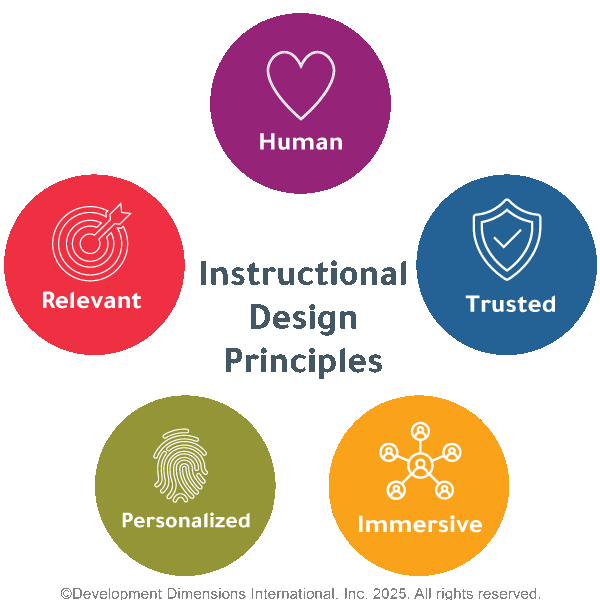
Leader-first instructional design puts leaders’ needs at the center of development. The most effective experiences are relevant, personalized, immersive, human, and trusted, giving leaders the structure, practice, and support they need to turn learning into better performance.
Like a swinging pendulum, leadership development methods move on a spectrum between two extremes. On one side sits traditional, structured classroom learning led by instructors. On the other side is fully self-guided learning with total freedom but little direction.
The strongest leadership development combines the benefits of both approaches. Leader-first instructional design creates enough structure to guide development while giving leaders the flexibility and relevance they need to apply learning to their work.
DDI research reinforces the value of combining approaches. Organizations that use five or more development methods are 4.9X more likely to report improved leadership capabilities, with effective strategies blending options such as manager coaching, internal coaching, self-paced learning, assessment, and AI-enabled experiences.
So what does effective instructional design look like in practice? At DDI, we focus on five principles that keep leaders at the center of the learning experience.
Why Instructional Design Principles Matter More Than Ever
In the past, instructional design leaned heavily toward the left side of the pendulum. Based on proven techniques, instructional design professionals would carefully craft learning experiences that followed specific principles and rules for learning. This approach often relied on a highly knowledgeable instructor.
While structured learning has clear benefits, it can feel too rigid. This “one-size-fits-all” approach often doesn’t allow enough room for personalized or in-the-moment learning.
As a result, companies swung the other way. Learning design took a backseat as they moved toward a looser approach where almost anything could count as training. Articles, videos, short courses, podcasts—learning was everywhere.
And to some extent, that’s true. We do learn from everything we do. But the real question is: Do these self-guided experiences lead to lasting change? The most effective learning drives real shifts in leaders’ behavior.
As learning becomes easier to create, customize, and deliver, strong instructional design matters more than ever. The goal isn’t simply to give leaders more content or more choices. It’s to intentionally design experiences that help them understand, practice, retain, and apply the behaviors that matter most.
Whatever the format, effective learning starts with intentional design that helps leaders build skills they can use when it matters most.
5 Principles of Leader-First Instructional Design
Effective leadership development starts with intentional design. These five principles help keep leaders’ needs at the center of every learning experience:

Design Principle #1: Relevant
Leaders often see frameworks and examples that don’t directly relate to their daily challenges. Effective learning must address real situations and engage leaders in practical ways. That means connecting new skills to the situations leaders actually face and the context in which they need to apply them.
Leaders also need to connect with their company’s purpose. They want to see how their growth aligns with company values, strategic priorities, and business goals.
To make learning more relevant:
- Bring in your company culture. Find ways to incorporate your leaders’ current situations by tying concepts to your company values or current projects, strategic priorities, or leadership expectations. Ask learners, “Does this work at our organization? If not, why?”
- Use real examples. When introducing a topic, ask leaders to provide their own examples. Prepared examples can work, but give leaders the option to suggest others. Make it easy to tailor exercises and connect them to their workplace situations.
- Know your leaders’ needs. Combine assessment with development to help leaders build the right skills to address their biggest needs. Assessments highlight growth areas and align learning with the demands of their current or future roles.
Relevance also means being selective about what leaders learn. Rather than trying to cover everything, instructional design should prioritize the behaviors most likely to help leaders perform in their roles and support the organization’s goals.
DDI’s Global Leadership Forecast supports this more targeted approach: assessment can help identify individual strengths and growth areas while also giving organizations insight into broader capability needs.

Design Principle #2: Personalized
Leaders have limited time for development. DDI’s research finds that only 30% of leaders feel they have enough time to execute their responsibilities with the depth and diligence required. So, every minute spent learning must count. That makes it especially important for development to focus on what each leader needs most.
Many L&D teams struggle to define what personalized development really means. Does it mean each leader gets their own digital learning path? Does personalization mean that development plans are based on individual assessment results? Does it mean suggesting content based on what leaders liked before? Or does it mean serving leaders content that helps them grow the most?
Personalized learning can take all of those forms. At DDI, we believe that personalized leadership development means addressing leaders’ unique challenges today while equipping them with future-ready skills. That can mean tailoring development based on a leader’s level, role, responsibilities, assessment results, previous experience, immediate priorities, and current challenges.
But personalization isn’t simply about giving leaders more choices. Setting learners loose in a vast content library may provide flexibility without giving them meaningful direction. And while AI can recommend or adapt content quickly, technology alone doesn’t determine what a leader most needs to learn.
DDI research shows why direction matters: objective diagnostic assessments deliver strong ROI for 54% of organizations, compared with 37% for standalone learning libraries. Coaching and 360-degree feedback also perform strongly, reinforcing the value of pairing scalable learning with personalized insight, practice, and feedback.
Effective personalization uses data and insight to target the skills and experiences that will help each leader grow. It gives leaders enough choice to make development personally relevant without losing the instructional direction that makes learning effective.

Design Principle #3: Immersive
At its core, immersive learning is learning by doing. Learners become active participants in the learning process by directly engaging with situations and challenges they can relate to. Defined by its experiential nature, immersive learning includes problem-solving, case studies, simulations, and other interactive methods that allow learners to practice their skills in a safe, relevant environment.
This kind of practice matters because knowing what good leadership looks like isn’t the same as being able to demonstrate it when the pressure is on. Leaders need opportunities to practice new behaviors, see the impact of their choices, receive feedback, and adjust their approach.
Emerging technologies like AI-driven simulations can make immersive practice more accessible and scalable. For example, AI-enabled practice can provide immediate feedback on leaders’ responses to realistic workplace scenarios. Leaders can rehearse critical skills such as coaching, communication, decision-making, and influencing others in a safe space, without feeling self-conscious. This helps them refine their skills and build confidence. And leaders love it.
Behavioral leadership simulations can provide an even deeper immersive experience. These “day in the life” experiences give leaders an opportunity to demonstrate their skills across realistic, interconnected challenges without the consequences of making those decisions on the job.
At the same time, leaders also value practicing leadership skills such as coaching or delegating with peers in real time. Learning with and from others satisfies our need to connect.
Immersive learning isn’t defined by one technology or format. What matters is creating meaningful opportunities for leaders to practice, receive feedback, and strengthen the behaviors they’ll need in real situations.

Design Principle #4: Human
This instructional design principle might seem obvious, but it’s often overlooked: Leadership is fundamentally human. Leaders aren’t simply solving business problems. They’re navigating situations shaped by other people’s needs, reactions, emotions, and perspectives.
Leaders bring their heads and hearts to their work, role, and every interaction. Each has their own strengths and weaknesses to manage. And they do their best to handle the expected and unexpected challenges and opportunities that fill each day.
As organizations explore new ways to develop leaders, AI-driven learning tools are becoming more common. When used effectively, AI can enhance learning through personalized experiences and instant feedback. But AI doesn’t remove the need for human-centered design. Empathy, emotional connection, reflection, context, and relationships are all part of how leaders learn. Technology should strengthen those elements, not replace them.
At DDI, we make human connection a core part of leadership development in several ways:
- Generate empathy. Recognizing and responding to learners’ emotions, including the need to feel respected, is as important as meeting business goals. Practice emotional intelligence (EQ) to balance heart and head in a safe learning environment.
- Tap into frustrations. Leaders often encounter problems when trying new skills. Talk about these challenges and what made those skills difficult to apply.
- Tell stories. Facilitators can bring key points to life with real-world scenarios and compelling stories. Encourage learners to share their own experiences, and supplement with facilitator examples when needed.

Design Principle #5: Trusted
The last instructional design principle is more important than ever as AI evolves and the risk of misinformation grows: trusted content.
When you have a question, what do you do first? Do you turn to the web, ask AI, or check social media? It’s quick and easy, right? In seconds, you can read AI-generated summaries, browse articles, watch short videos, listen to podcasts, all offering instant answers.
But how do you know what to trust? What makes the creator an expert? How do you know the answer is right? Or that the suggested approach fits your needs?
You can’t stop leaders from searching online for solutions. But you can make sure formal development offers something more: evidence-based guidance built on proven leadership behaviors and strong instructional design.
Trusted learning isn’t only about whether the underlying content is accurate. It also depends on the design decisions behind the experience: Which behaviors deserve the most emphasis? What should leaders practice? In what sequence? When do they need feedback or human support?
These questions become even more important as AI makes it possible to customize learning content faster. AI can help create scenarios, examples, discussion questions, and other learning materials, but strong instructional design provides the guardrails that keep customization aligned with learning objectives and the behaviors leaders need to develop.
Ultimately, leaders should be able to access timely support for their real challenges while knowing the guidance is grounded in leadership science, aligned with their organization, and designed to help them improve.
Put Instructional Design Principles into Practice
Not every learning experience needs to apply all five instructional design principles equally. A quick resource might prioritize relevance and trust, while a larger learning experience may bring together all five.
What matters is intentional design. Ask whether an experience is relevant to leaders’ work, personalized to what they need, designed for active practice, grounded in human connection, and based on content they can trust.
Together, these principles help turn leadership development from a collection of content into an experience designed to change how leaders perform on the job.
Have a Question?
Frequently Asked Questions About Instructional Design Principles
-
What are the best instructional design principles for leadership training?

The best instructional design principles for leadership training put leaders’ needs at the center of the learning experience. At DDI, five leader-first principles guide effective development: relevant, personalized, immersive, human, and trusted. Together, they help leaders build skills they can practice, apply, and use on the job.
-
What is immersive learning in leadership training?
Immersive learning gives leaders opportunities to learn by doing. It uses realistic challenges, practice, and feedback to help leaders try new behaviors in a safe environment, refine their approach, and build confidence before applying new skills on the job.
-
Can AI replace human leadership coaches or trainers?
AI can enhance leadership development through personalized learning, realistic practice, and immediate feedback, but it can’t fully replace human coaches or trainers. Leadership is inherently human, and development often requires empathy, emotional connection, context, reflection, and relationships that technology alone can’t provide.
-
How do you personalize leadership development training?
Personalize leadership development by using insights about each leader’s role, level, responsibilities, experience, assessment results, priorities, and current challenges. These insights can help focus development on the skills and experiences that are most relevant to the individual rather than giving every leader the same learning path.